
The Stages of Gum Disease — and How Each One Is Treated

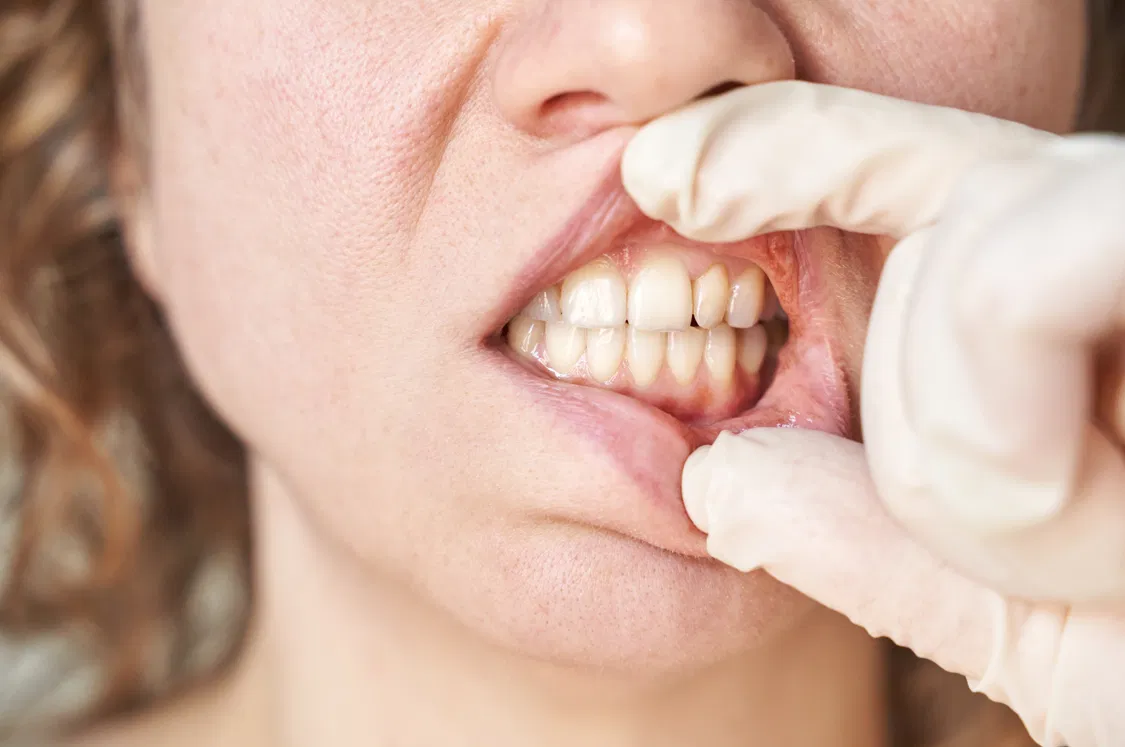
Red, swollen gums showing gingivitis, the first of the stages of gum disease

Bleeding when you brush. Gums that look puffy or seem to be pulling back. A bad taste that won’t go away. These can all be signs of gum disease, and they’re easy to dismiss as “nothing serious.” The truth is that gum disease is usually painless until it is advanced.

The stages of gum disease run from mild gum inflammation (gingivitis) to advanced periodontitis, and the right treatment changes at every stage. The earlier gum disease is found, the simpler it is to treat.

In this guide, we walk through each stage, what is happening below your gumline, and how it is treated. At Haru Dental in Torrance, we measure your gum pockets at your checkups, so changes can be caught long before you feel them.

What Is Gum Disease, and How Common Is It?

Gum disease (also called periodontal disease) is an infection and inflammation of the tissues that hold your teeth in place. It starts with plaque, a sticky film of bacteria that builds up on your teeth every day. If plaque isn’t removed, it hardens into tartar, which only a dental professional can clean off.

Gum disease is very common. According to the Centers for Disease Control and Prevention (CDC), about 4 in 10 U.S. adults age 30 and older had some level of periodontitis, the more serious form of gum disease, in 2009–2014. About 60% of adults age 65 and older had it. The CDC also notes that gum disease can become serious before a person notices any symptoms.

What Are the Stages of Gum Disease?

Gum disease is usually described in four stages. The first, gingivitis, affects only the gums. The other three are stages of periodontitis, which means the infection has reached the bone that supports your teeth. The further it goes, the more support is lost.

Gum specialists use a more formal system developed by the American Academy of Periodontology (AAP) and the European Federation of Periodontology. As the AAP explains, a periodontist may assign a stage, from initial to severe, and a grade, which describes how fast the disease is likely to progress.

The four-stage version below is the simpler way most patients hear it explained. The pocket depths are typical ranges rather than strict cut-offs.
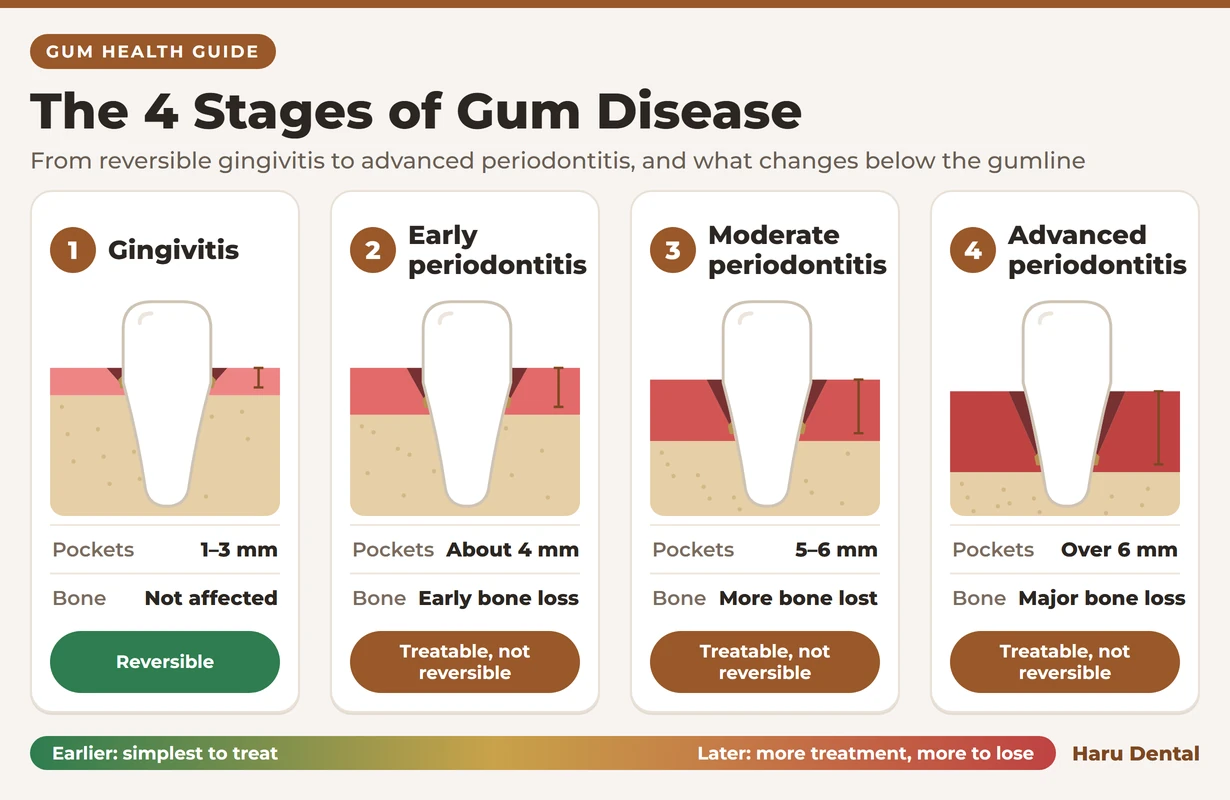
Chart of the four stages of gum disease, from gingivitis to advanced periodontitis, showing pocket depth and bone loss at each stage

How Do Dentists Tell Which Stage You Are In?

Between each tooth and the gum is a small space called a pocket. During an exam, your dentist or hygienist gently measures these pockets with a small probe and records every one. Healthy pockets are about 1 to 3 millimeters deep.

As gum disease progresses, the pockets get deeper, because the gum and bone are pulling away from the tooth. These measurements, along with X-rays, show which stage you are in and how your gums change from visit to visit.

The four gum disease stages at a glance, including the three periodontitis stages that damage bone:

StagePocket depthMain treatment
1. Gingivitis1–3 mmProfessional cleaning and better home care
2. Early periodontitisAbout 4 mmDeep cleaning (scaling and root planing)
3. Moderate periodontitis5–6 mmDeep cleaning, then a re-measure and targeted follow-up
4. Advanced periodontitisOver 6 mmDeep cleaning, plus a referral for gum surgery where needed

Gum Disease Treatment at Each Stage

Stage 1: Gingivitis (Fully Reversible)

What’s happening: Plaque along the gumline irritates your gums. They may look red or puffy, and they may bleed when you brush or floss. At this stage, there is no damage to the bone yet.

How it’s treated: Gingivitis is the only stage that can be fully reversed. According to the National Institute of Dental and Craniofacial Research (NIDCR), early gum disease caused by plaque can often be reversed with daily brushing and flossing. Treatment usually includes:

  • A professional cleaning to remove plaque and tartar
  • Better daily brushing and cleaning between your teeth, with tips from your hygienist (see our oral hygiene page)
  • Regular checkups to make sure your gums stay healthy

With thorough daily cleaning, many people see their gums settle within days to a few weeks. If your gums still bleed after two weeks of proper cleaning, have them looked at rather than brushing past it.

Stage 2: Early (Mild) Periodontitis

What’s happening: The infection has moved below the gumline. Pockets deepen to around 4 millimeters, and the bone around the teeth begins to break down. You may notice bleeding, bad breath, or gums that look slightly pulled back.

How it’s treated: Once bone is affected, the damage can’t be undone, but it can be stopped. The main treatment is scaling and root planing, often called a deep cleaning. The area is numbed, and tartar and bacteria are removed from the tooth roots below the gumline. The roots are then smoothed so the gums can heal and reattach more snugly.

At Haru Dental, a deep cleaning is usually split into two visits, treating half of the mouth at a time, with a follow-up measurement about four to six weeks later.

To learn how a deep cleaning differs from a regular cleaning, and what it costs, read our guide to deep cleaning teeth or see our deep teeth cleaning page.

Stage 3: Moderate Periodontitis

What’s happening: Pockets are deeper, often around 5 to 6 millimeters, and more bone has been lost. Teeth may start to feel slightly loose or sensitive. Gums may pull back, which makes teeth look longer.

How it’s treated: Scaling and root planing is still the first step for most patients. About four to six weeks later, every pocket is measured again. Numbers that have come down mean the treatment worked, and any area that is still deep is dealt with specifically rather than treating the whole mouth again. After treatment, most patients move to a closer cleaning schedule (see the periodontal maintenance section below).

If your gums have pulled back and exposed the roots, ask about treating the recession once the gum disease is under control. Haru Dental treats gum recession with the pinhole technique, and active gum disease is treated first.

Stage 4: Advanced Periodontitis

What’s happening: Significant bone and gum support has been lost. Pockets may be deeper than 6 or 7 millimeters. Teeth can shift, loosen, or develop gaps, and your bite may change. Without treatment, teeth may eventually need to be removed.

How it’s treated: When pockets are too deep to clean without surgery, gum surgery is considered. That is generally when pockets go beyond about six or seven millimeters, and where surgery is genuinely needed, you are referred for it.

The goal at this stage is to stop further loss and keep as many teeth as possible. If a tooth can’t be saved, there are ways to replace it, such as dental implants once your gums are healthy again. You can read about what dental implants cost in our price guide.

Wondering which stage you are in?

After Treatment: Why Periodontal Maintenance Matters

Here is something many patients don’t expect: after treatment for periodontitis, a regular six-month cleaning usually isn’t enough. In a treated mouth, deeper pockets can fill back up with bacteria in roughly three months, below where a toothbrush can reach.

That’s why most patients move to periodontal maintenance, a special cleaning every three to four months. At each visit, we:

  1. Measure and record your pockets to track any changes
  2. Clean below the gumline where bacteria build up
  3. Review your home care and set your next visit

Many insurance plans cover part of periodontal maintenance, but often only two visits a year when you need three or four, so it helps to know where your coverage stops before you start. Learn more on our periodontal maintenance page.

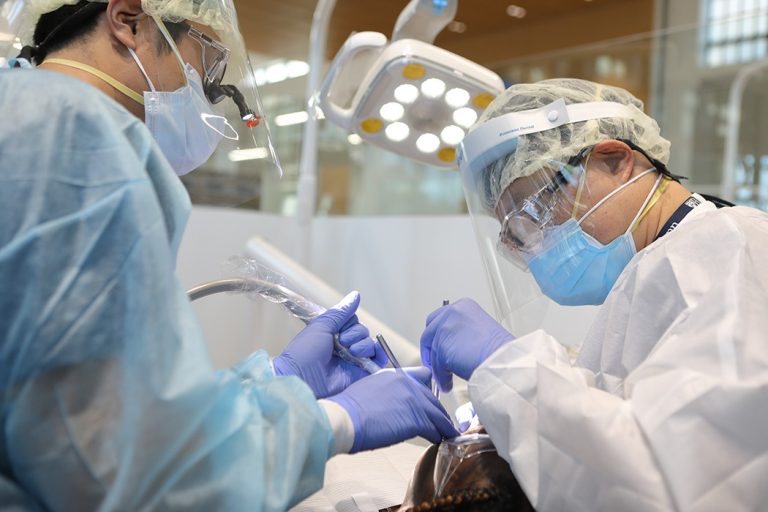
Dental hygienist cleaning a patient's teeth and checking gum health in a bright treatment room

What Raises Your Risk of Reaching the Later Stages of Gum Disease?

Anyone can get gum disease, but some things make it more likely. The CDC lists these associations, and notes that research on some of them is still ongoing:

  • Smoking (about 62% of current smokers age 30 and older had periodontitis in 2009–2014, according to the CDC)
  • Diabetes
  • Not brushing and cleaning between your teeth well
  • Hormone changes, such as during pregnancy or menopause
  • Some medications that affect your mouth
  • Grinding or clenching your teeth
  • Crooked teeth that are hard to clean
  • Family history

If any of these apply to you, regular checkups matter even more. Our own guidance is to come more often than every six months if you have been treated for gum disease, smoke, or have diabetes. Read more about what happens at a dental checkup and cleaning.

Gum Health and Your Overall Health

Your gums don’t exist in isolation. Research has linked gum disease with other health conditions, especially diabetes. The relationship can work both ways: diabetes raises the risk of gum disease, and the CDC says untreated periodontitis can make conditions such as diabetes worse.

Researchers are still studying these links, but it’s one more reason to take bleeding or swollen gums seriously. If you have diabetes or another long-term health condition, let your dentist know before treatment.

Signs of the Early Stages of Gum Disease: When to See a Dentist

Book a visit if you notice:

  • Gums that bleed when you brush or floss
  • Red, swollen, or tender gums
  • Bad breath or a bad taste that doesn’t go away
  • Gums pulling away from your teeth
  • Loose or shifting teeth, or a change in how your teeth fit together
  • Pain when chewing

Even without symptoms, regular checkups are the best way to catch gum disease early, when it is easiest to treat. If it has been a while since your last visit, that’s not a problem: the first visit is an assessment and a conversation. To have your gums checked, call Haru Dental at (310) 362-2875 or visit us at 1454 Marcelina Ave, Torrance, CA 90501.

Frequently Asked Questions

Can gum disease be reversed?

Gingivitis, the earliest stage, can be reversed with a professional cleaning and good daily home care. Once periodontitis has caused bone loss, the lost bone doesn’t grow back. Treatment can stop the damage from getting worse, which is why catching it early matters so much.

What happens if gum disease is left untreated?

Gingivitis can progress to periodontitis. As the pockets deepen, the bone that holds your teeth keeps breaking down, and teeth can loosen, shift, and eventually need to be removed. Periodontitis can’t be reversed, but professional treatment can slow it down and keep it under control.

How do I know which stage of gum disease I have?

Measurements decide it, not symptoms. Healthy pockets are about 1 to 3 millimeters, around 4 millimeters points to early periodontitis, 5 to 6 millimeters is moderate, and anything deeper is advanced, with X-rays showing how much bone has been lost. Because gum disease is often painless, you can’t reliably judge the stage by how your gums feel.

Does gum disease treatment hurt?

A deep cleaning is done with the area fully numbed, so the appointment itself is comfortable. Afterward, expect two to three days of gum tenderness and a few weeks of cold sensitivity, because the root surfaces are no longer covered by tartar. A sensitivity toothpaste and warm salt-water rinses help while your gums settle.

How long does gum disease treatment take?

A deep cleaning is usually split into two visits, treating half of the mouth each time, so you are never numb on both sides at once. A follow-up visit about four to six weeks later re-measures every pocket. After that, periodontal maintenance cleanings are usually every three to four months.

Why do my gums look like they are pulling back after a deep cleaning?

It is expected, not a complication. Inflamed gums are swollen, and once the inflammation goes down they tighten to their true position, which can make teeth look slightly longer. Leaving the inflammation in place would cost you the bone underneath.

Can I go back to regular cleanings after gum disease treatment?

Sometimes, if your pockets become shallow and stay that way, with no bleeding, over a sustained period. It depends on how much bone was lost before treatment. Because bone doesn’t regrow, many people who have lost support need the closer three- to four-month schedule long term, and the pocket charting is what answers it.

Is gum disease treatment covered by insurance?

Many plans cover a share of scaling and root planing and of periodontal maintenance, though limits vary. Maintenance is often covered only twice a year when three or four visits are needed. Haru Dental verifies your benefits before treatment and tells you where your coverage stops. See our insurance and payment options for the plans we work with.

On this page

Book Your Visit

Have a question about this topic? Our team is happy to help.

Related guides

Scroll to Top