
Inlays and Onlays in Torrance, CA — Between a Filling and a Crown
When a cavity is too large for a filling to hold but the tooth is too sound to crown, an inlay or onlay is the answer. A custom ceramic piece bonded into the tooth — keeping far more of your own structure than a crown would.
259 reviews from Torrance families
than a full crown does
strengthens the remaining walls
milled in the office where suitable
What Inlays and Onlays Are
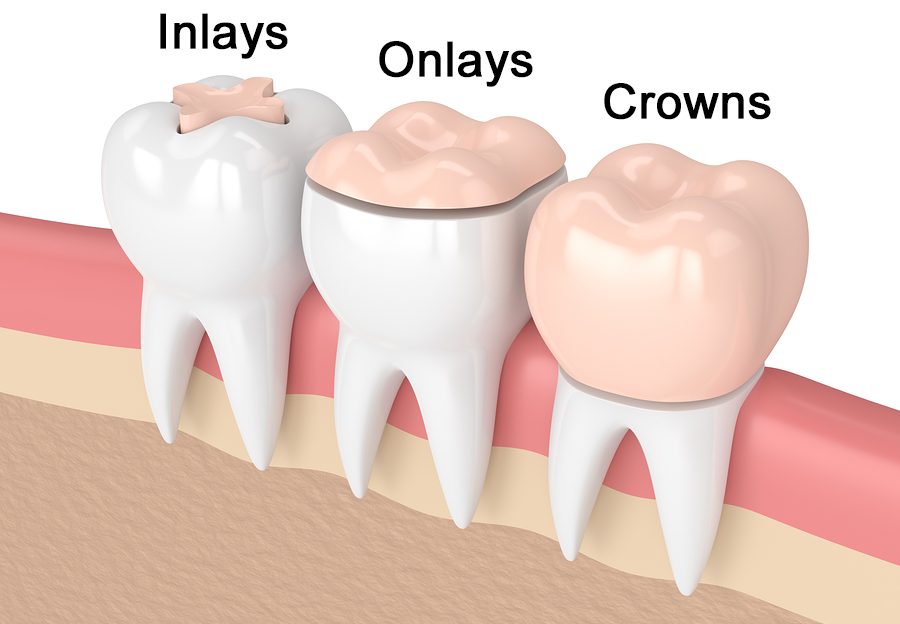
Both are custom-made pieces of ceramic bonded into a prepared tooth. An inlay sits within the cusps, filling the middle of the biting surface. An onlay extends over one or more cusps, rebuilding part of the outer wall as well.
They exist because there is a real gap between a filling and a crown. A large direct filling flexes under load and eventually cracks the wall beside it; a crown solves that but requires the whole tooth to be reduced. An onlay covers only the part that needs covering.
When an Inlay or Onlay Is the Right Repair
This is a middle option, and knowing where the middle sits is the whole decision.
An inlay or onlay fits when…
- The cavity is too wide for a filling to hold reliably
- A cusp is cracked but the rest of the tooth is sound
- A large old filling needs replacing and the walls are thin
- You want to avoid reducing the whole tooth for a crown
- The tooth has been root treated but retains good structure
Something else fits better when…
- The cavity is small with sound walls — a filling is enough
- Most of the tooth above the gum has gone — a crown is needed
- The tooth is cracked below the gum line — that is an extraction discussion
- Several cusps are missing and the tooth needs full coverage
- Grinding is uncontrolled — a night guard comes first
We show you the X-ray and the tooth on screen. If a filling would do, you will be offered a filling — the middle option is only worth it when it is genuinely the right one.
What Inlays and Onlays Cost in Torrance
An inlay or onlay sits between a filling and a crown in price, as it does clinically. You get the figure before the tooth is prepared.
More than a filling, less than a crown
It is custom-made rather than placed directly, which is why it costs more than composite — and it covers less tooth than a crown, which is why it costs less.
Insurance usually contributes
Inlays and onlays are restorative treatment and most plans pay a share, though some classify them differently from crowns. We check yours specifically.
Value is in the tooth kept
Preserving more natural structure makes the tooth stronger and any future work simpler. That is the return, and it does not show on an invoice.
Filling vs Inlay/Onlay vs Crown
Three repairs on a scale of how much tooth is left. Choosing correctly is mostly about not over-treating.
Inlay or onlay
Custom ceramic bonded into the tooth.
- Bonded, so it strengthens what remains
- Keeps far more tooth than a crown
- Can often be milled the same day
Direct filling
Composite placed straight into the cavity.
- Right while the surrounding walls are sound
- One visit, lowest cost
- Flexes and cracks the wall if made too large
Full crown
Covers the entire visible tooth.
- For teeth that have lost most of their structure
- Strongest option, and the most tooth removed
- See dental crowns
Your Inlay or Onlay, Step by Step
One visit where it can be milled in the office, two where the case suits a laboratory.
Prepare Conservatively
The tooth is numbed and only the damaged tissue and old filling material are removed. Unlike a crown preparation, the sound walls are left standing.
Scan & Make
A digital scan captures the preparation and your bite. The piece is either milled in the office while you wait or made by a laboratory, in which case a temporary is fitted.
Bond & Balance
The inlay or onlay is bonded into the tooth — bonding is what makes it strengthen the remaining walls rather than just fill a hole — then the bite is checked and adjusted.
Making an Onlay Last
Ceramic does not decay. The natural tooth around the margin can, and that is where attention goes:
- Brush twice a day and clean the margin between the teeth daily
- Keep six-month checkups so margins are X-rayed before decay gets underneath
- Wear a night guard if you grind — ceramic is strong but not indestructible
- Avoid ice, hard candy and using teeth as tools
- Report a high feeling or lingering sensitivity early; both adjust quickly
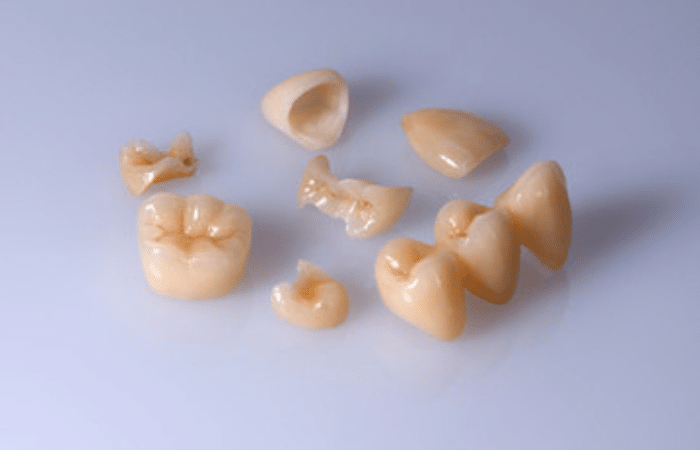
Bonded ceramic inlays and onlays commonly last ten to fifteen years and often longer — comparable to a crown, on a tooth that kept more of itself.
Why Torrance Patients Get Onlays Here
We offer the middle option
Many practices go straight from filling to crown. An onlay takes more planning and keeps more tooth, and it is offered here whenever it is the right repair.
Restorative training behind it
Dr. Jongwook Lee holds an MS in Restorative Dentistry. Knowing when a cusp needs covering and when it does not is a judgement, not a rule.
Same-day where it suits
Scanner and milling unit on site, so many inlays and onlays are prepared and bonded in a single appointment — see same-day crowns.
Easy from anywhere in the South Bay
A short drive from Redondo Beach, Manhattan Beach, Hermosa Beach, Gardena, Carson, Lomita, Palos Verdes, Harbor City and San Pedro, with free parking on site.
Inlay and Onlay Questions, Answered
An inlay sits inside the cusps, restoring the middle of the biting surface. An onlay extends over one or more cusps, rebuilding part of the outer wall as well. Both are custom-made and bonded in; the difference is simply how much of the tooth they cover.
It depends on how much sound tooth is left. A crown covers the entire tooth and requires it to be reduced all round; an onlay covers only the part that needs covering. Where the walls are still sound, an onlay keeps significantly more of your natural tooth, which makes it stronger long term and any future treatment easier.
They sit between a filling and a crown in price, as they do clinically — more than composite because they are custom-made, less than a crown because less of the tooth is covered. Most insurance plans contribute, though some classify them differently from crowns, so we check your specific plan first.
Commonly ten to fifteen years and often longer, comparable to a crown. Because they are bonded rather than cemented over the tooth, they also reinforce the remaining walls. What ends them is decay starting at the margin, which is why cleaning that margin daily matters.
Often, yes. With a scanner and milling unit on site, many inlays and onlays are prepared, made and bonded in a single appointment with no temporary. Cases where the shade is difficult or the case is complex are better made by a laboratory over two visits.
The tooth is prepared under local anesthetic so the appointment is comfortable. Some sensitivity to cold for a few days afterwards is normal, and longer if the cavity was deep. If it feels high when you bite, come back — a two-minute adjustment fixes it.
Usually ceramic, which is strong, does not stain and matches the tooth. Composite and gold are also possible — gold is exceptionally durable and still occasionally the best material for a back tooth, if you do not mind the appearance.
Yes. Our office on Marcelina Ave in Old Torrance is a short drive from Redondo Beach, Manhattan Beach, Hermosa Beach, Gardena, Carson, Lomita, Palos Verdes, Harbor City and San Pedro. Parking on site is free, and many cases are completed in a single visit.
More Restorative Treatments
Told You Need a Crown? Ask About an Onlay.
Book an assessment at Haru Dental in Old Torrance. We will show you the X-ray and tell you honestly whether the tooth needs full coverage — or whether an onlay would keep more of it.
Opening Hours
- Mon–Fri: 9:00 AM – 6:00 PM
- Every other Saturday: 9:00 AM – 3:00 PM
- 1454 Marcelina Ave, Torrance, CA 90501
- (310) 362-2875