
Dental Bridges in Torrance, CA — Close the Gap in Weeks
A fixed row of teeth anchored to the teeth either side of a gap, or to implants. Cemented in place, cleaned in your mouth, and finished in about two to three weeks rather than the months an implant needs.
259 reviews from Torrance families
from preparation to fitted bridge
it stays in and you clean around it
typical life with good care
What a Dental Bridge Actually Is
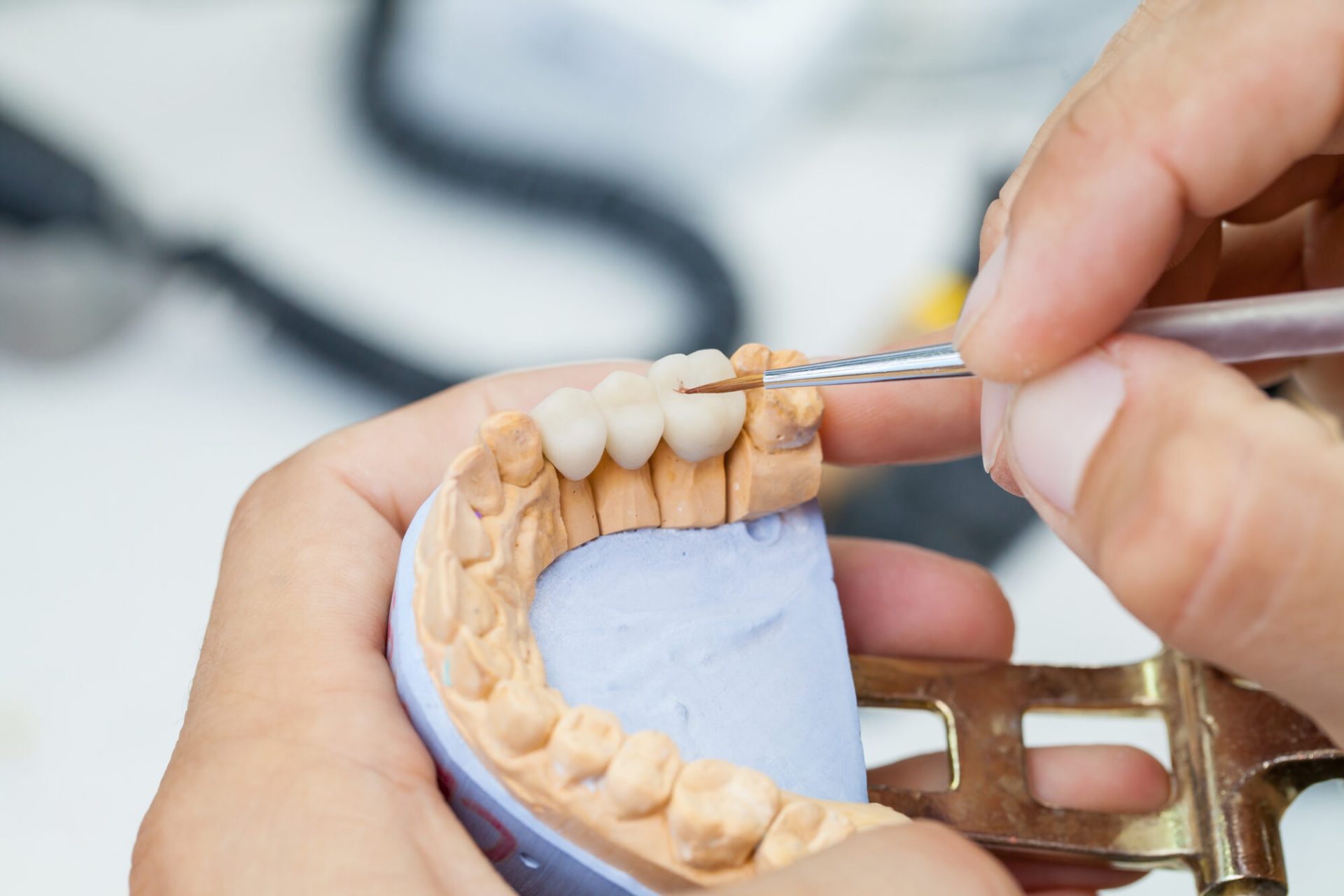
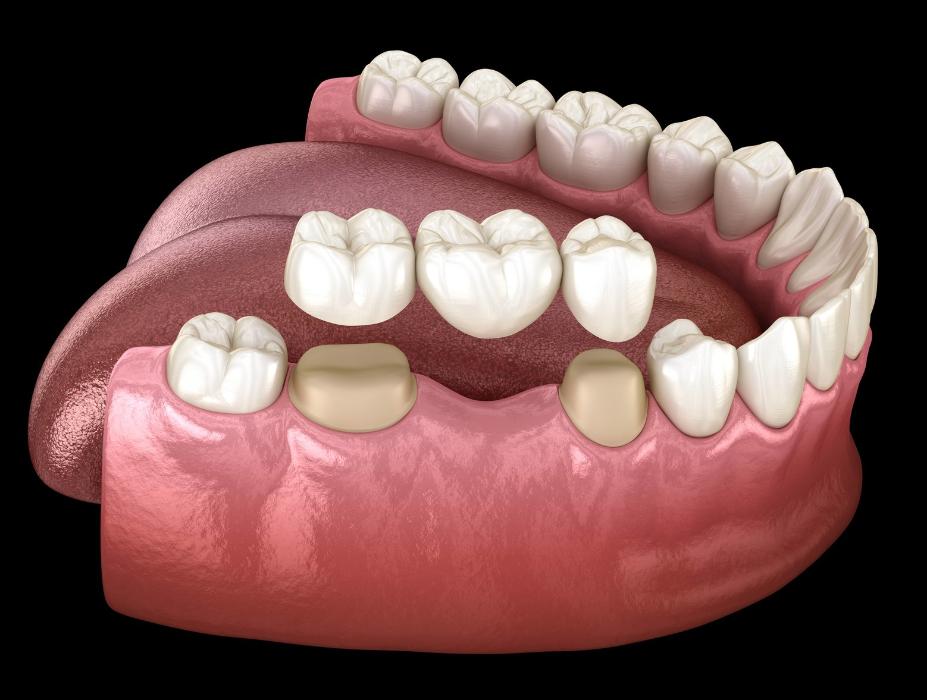
A bridge is a single piece of dental work carrying one or more replacement teeth, held up by the teeth on either side of the gap. Those supporting teeth are crowned, the replacement tooth sits between them, and the whole unit is cemented in as one.
What you get is a fixed tooth in weeks. Nothing comes out at night, nothing needs adhesive, and it is cleaned in place — though the underside of the false tooth needs threading floss or a water flosser rather than ordinary floss.
When a Bridge Is the Better Choice
A bridge and an implant both fill a gap well. Which is right comes down to the teeth beside it, the bone underneath, and how quickly you need it done.
A bridge fits well when…
- The teeth either side already need crowns anyway
- There is not enough bone for an implant without grafting
- You want it finished in weeks, not months
- A health condition makes implant surgery inadvisable
- One to three teeth are missing in a row with sound teeth at both ends
- Cost matters now and an implant is out of reach
An implant is usually better when…
- The neighboring teeth are healthy and untouched — a bridge means cutting them down
- You want to stop the bone under the gap shrinking
- The gap is at the very back with no tooth behind it
- You are young and want the longest-lasting option
- Cleaning under a bridge every day is not realiztic for you
We show you both plans with both prices at the consultation. If the teeth beside your gap are already heavily filled, a bridge stops being a compromise and becomes the sensible answer.
What Dental Bridges Cost in Torrance
Dental bridge cost is driven by how many units it spans and what it is made from. A three-unit bridge is priced as three crowns joined together, because that is essentially what it is.
Priced by unit
Each crown and each replacement tooth is a unit. A single missing tooth between two healthy ones is a three-unit bridge — the most common case.
Insurance usually contributes
Bridges are restorative, not cosmetic, so most plans pay a share. We verify your benefits and give you the out-of-pocket figure before the teeth are prepared.
Compared with an implant, openly
A bridge normally costs less up front than an implant and more over thirty years, because it is replaced sooner. You get both numbers, not just the one we quote.
Traditional vs Cantilever vs Implant-Supported
Three kinds of bridge. The teeth around your gap decide which one is even possible.
Traditional bridge
Supported by a crowned tooth at each end.
- Strongest and most predictable design
- Needs healthy teeth on both sides of the gap
- Both supporting teeth are prepared for crowns
Cantilever bridge
Anchored to a tooth on one side only.
- For gaps with a tooth on one side only
- Used selectively — it loads that tooth harder
- Best at the front, where bite force is lower
Implant-supported bridge
Carried by implants instead of your own teeth.
- No healthy tooth is cut down for it
- Keeps loading the jaw, so bone is preserved
- Longer timeline and higher up-front cost
Your Bridge Treatment, Stage by Stage
Two appointments, two to three weeks apart, and a temporary bridge in between so there is never a visible gap.
Prepare & Scan
The supporting teeth are shaped under local anesthetic to make room for the crowns. A digital impression captures them along with your bite and the shape of the ridge under the gap.
Temporary Bridge
A temporary bridge protects the prepared teeth and keeps your smile intact while the lab builds the final one, shaded to match the teeth around it.
Fit & Cement
The finished bridge is tried in and checked for fit, shade and bite. We also check you can clean underneath it before it is cemented — that is the part that decides how long it lasts.
Cleaning Under a Bridge — the Part That Matters
A bridge does not decay, but the teeth holding it up absolutely can, and they are now under porcelain where you cannot see them. Cleaning underneath is not optional:
- Use a floss threader or superfloss to clean under the false tooth daily
- A water flosser makes this far easier and most patients stick with it
- Brush twice a day, paying attention to the gum line at both supporting teeth
- Keep six-month checkups so the margins are X-rayed before decay takes hold
- Wear a night guard if you grind — a bridge takes the force of several teeth at once
- Avoid chewing ice and hard candy on it
Looked after that way, a bridge commonly lasts ten to fifteen years. When one fails it is nearly always decay in a supporting tooth, not the bridge itself — which is why the flossing matters more here than almost anywhere else.
Why Torrance Patients Choose Haru for Bridges
Both options, both prices
You see the bridge plan and the implant plan side by side with real figures, so the choice is informed rather than steered.
Designed by a restorative dentist
Dr. Jongwook Lee holds an MS in Restorative Dentistry and three years of prosthodontic training. A bridge that is not balanced against the opposing bite is a bridge that fails early.
We teach the cleaning before we cement
You will leave knowing exactly how to clean under it, with the threader or water flosser to do it. That single habit is the difference between ten years and four.
Easy from anywhere in the South Bay
A short drive from Redondo Beach, Manhattan Beach, Hermosa Beach, Gardena, Carson, Lomita, Palos Verdes, Harbor City and San Pedro, with free parking on site.
Dental Bridge Questions, Answered
A bridge is priced by unit — each crown and each replacement tooth counts as one — so a single missing tooth between two healthy ones is a three-unit bridge. Material affects it too. Bridges are restorative rather than cosmetic, so most insurance plans contribute, and you get the out-of-pocket figure before any tooth is prepared.
It depends on the teeth either side. If they are healthy and untouched, an implant is usually the better dentistry: nothing is cut down and the bone keeps being loaded. If those teeth already need crowns, a bridge does two jobs at once and is finished in weeks instead of months. A bridge costs less up front; an implant usually costs less over thirty years.
Commonly ten to fifteen years with good care, often longer. Bridges rarely fail because the porcelain breaks — they fail because a supporting tooth decays underneath its crown. Daily cleaning under the false tooth and six-month X-rays of those margins are what extend it.
Usually two appointments about two to three weeks apart. The teeth are prepared and scanned at the first, a temporary bridge protects them meanwhile, and the finished bridge is fitted at the second. You are never left with a visible gap.
The supporting teeth are prepared under local anesthetic, so the appointment is comfortable. Some sensitivity to cold while the temporary is on is normal and settles once the final bridge is cemented.
With a floss threader or superfloss passed under the false tooth, or a water flosser — which most patients find far easier and actually keep doing. Ordinary floss cannot get under it because the bridge is one connected piece. We show you the technique before the bridge is cemented, not after.
Yes, commonly two or three in a row, provided there are sound teeth at both ends to carry the load. Beyond that the span flexes too much and an implant-supported bridge or a partial denture becomes the better answer.
It slowly shrinks, because nothing is loading it — bone maintains itself in response to chewing force, and a bridge transmits that force to the teeth at either end rather than into the ridge. Over years that can show as a small dip under the false tooth. Only an implant prevents it.
Yes. Our office on Marcelina Ave in Old Torrance is a short drive from Redondo Beach, Manhattan Beach, Hermosa Beach, Gardena, Carson, Lomita, Palos Verdes, Harbor City and San Pedro. Parking on site is free.
More Restorative Treatments
Ready to Close That Gap?
Book a consultation at Haru Dental in Old Torrance. You will see the bridge plan and the implant plan side by side, both costed in writing, before you choose either.
Opening Hours
- Mon–Fri: 9:00 AM – 6:00 PM
- Every other Saturday: 9:00 AM – 3:00 PM
- 1454 Marcelina Ave, Torrance, CA 90501
- (310) 362-2875