
Dental Crowns in Torrance, CA — Cap It Before It Splits
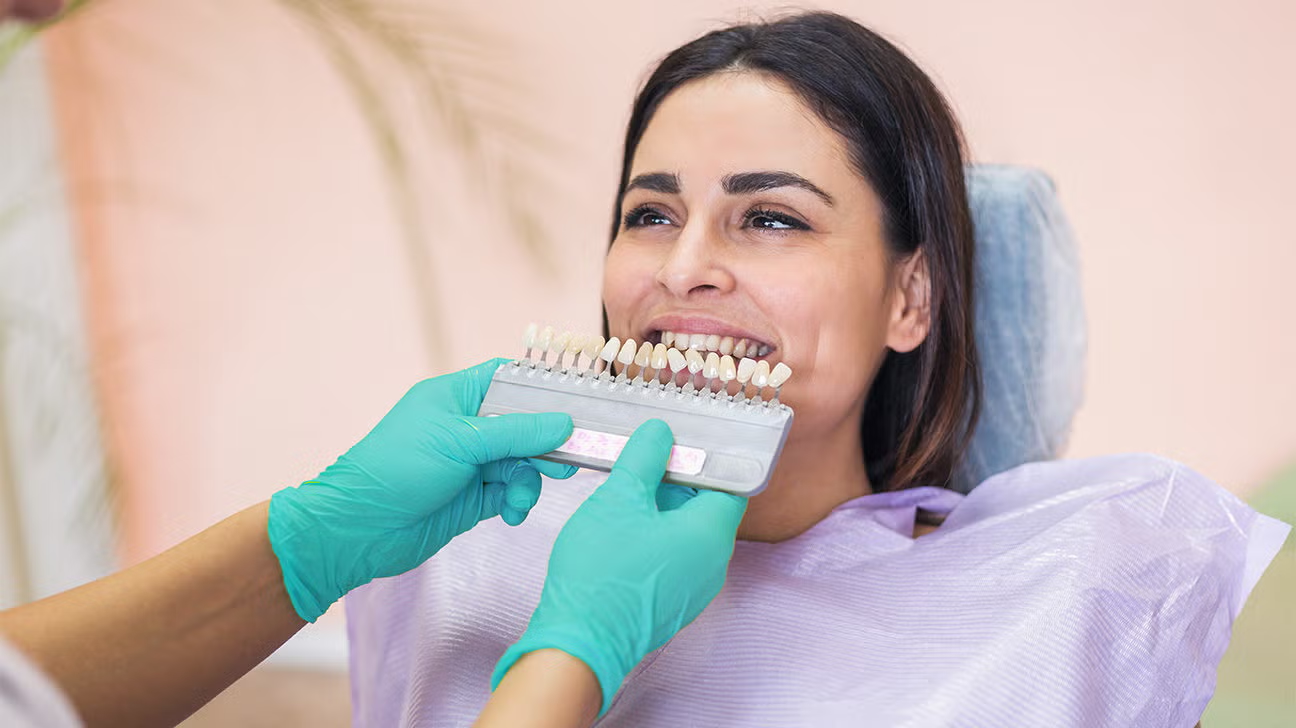
A crown covers a cracked, worn or heavily filled tooth and holds it together under chewing force. Each one is shade-matched to the teeth beside it, in porcelain, zirconia or a metal-ceramic blend depending on where it sits.
259 reviews from Torrance families
typical life of a well-kept crown
porcelain, zirconia, metal-ceramic
CEREC crowns milled in one visit
What a Dental Crown Actually Does
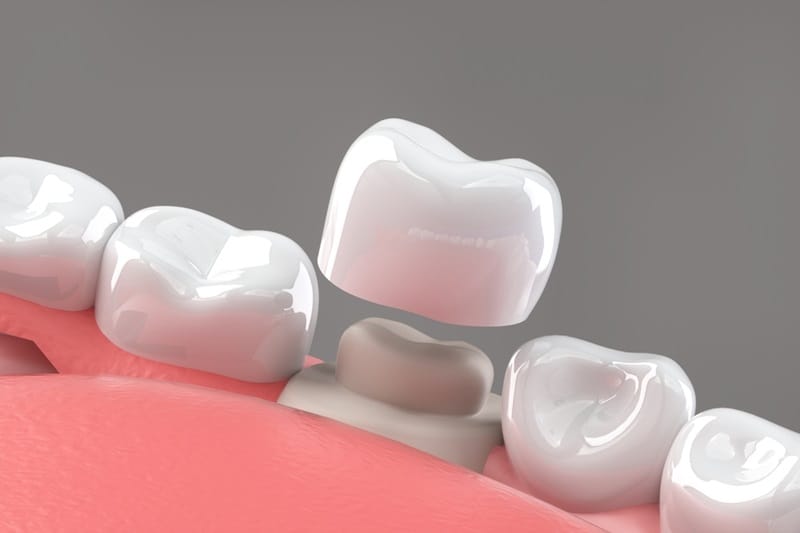
A crown — a cap, in everyday speech — is a custom shell that covers the whole visible part of a tooth. A filling sits inside the tooth and relies on the walls around it. A crown wraps the outside and holds those walls together, which is a fundamentally different job.
That distinction is why crowns get recommended after a root canal, or on a tooth carrying a very large old filling. Once enough of the natural structure has gone, the remaining walls flex when you bite, and flexing is what eventually splits a tooth in half — usually without warning, and usually beyond saving.
Do You Actually Need a Crown?
A crown is a bigger intervention than a filling and it is permanent, because the tooth is reshaped to receive it. We would rather explain why than simply schedule it.
A crown is usually the answer when…
- The tooth is cracked, or has a visible fracture line
- A very large old filling has left thin, flexing walls
- A root canal has been completed on a back tooth
- A cusp has already broken off under chewing
- Years of grinding have worn the tooth down
- An implant needs a crown placed on top of it
Something smaller may do when…
- Only part of the biting surface is damaged — an inlay or onlay preserves more tooth
- The chip is cosmetic and at the front — bonding or a veneer may be enough
- Decay is small and the walls are sound — a filling is the right size of repair
- The tooth is cracked below the gum and cannot be saved — that is an extraction conversation
- Grinding is uncontrolled — the night guard comes first, or the new crown goes the same way
We show you the X-ray and the crack. If a smaller repair would do the job, we will tell you — and inlays and onlays are often that smaller repair.
What Dental Crowns Cost in Torrance
Dental crown cost turns mostly on the material and on whether anything has to be done to the tooth first — a root canal or a build-up under the crown changes the total.
Priced by material
Full-contour zirconia, layered porcelain and metal-ceramic are made differently and priced differently. We explain which suits the tooth and why.
Insurance usually contributes
A crown is restorative, not cosmetic, so most plans pay a share. We verify your benefits and give you the out-of-pocket figure before we prepare the tooth.
Quoted with the groundwork
If the tooth needs a root canal or a core build-up first, that is in the quote from the start rather than added once treatment is under way.
Porcelain vs Zirconia vs Metal-Ceramic
Three materials, three trade-offs between how a crown looks and how much force it will take. Position in the mouth usually decides it.
Porcelain / all-ceramic
The most natural-looking option.
- Translucency closest to natural enamel
- No metal, so no grey line at the gum
- Best suited to front and premolar teeth
Zirconia
The strongest tooth-colored material.
- Takes heavy chewing force without fracturing
- Ideal for molars and for patients who grind
- Can be milled thinner, so less tooth is removed
Metal-ceramic
A ceramic layer over a metal core.
- Long, well-documented track record
- Strong, and useful for bridges spanning a gap
- A grey margin can show if the gum recedes
Your Crown Treatment, Stage by Stage
Two appointments for a lab-made crown, or a single visit where a CEREC crown suits the tooth.
Examine & Prepare
Digital imaging confirms a crown is the right call and shows what is left under the old filling. The tooth is then shaped under local anesthetic, and any weak structure is rebuilt first.
Scan & Protect
A digital impression captures the prepared tooth and your bite. A temporary crown protects it while the lab builds the final one, shaped and shaded to the teeth either side.
Fit & Balance
The finished crown is tried in, checked for fit at the margin and for contact with the opposing tooth, then bonded. The bite is balanced before you leave — that is what stops it feeling high.
Making a Crown Last Fifteen Years
The crown itself cannot decay. What fails is the natural tooth at the margin where crown meets gum, so that is where the care goes:
- Brush twice a day and floss the margin daily — slide the floss out sideways, do not snap it up
- Keep six-month checkups so the margin is checked before decay gets underneath
- Wear a night guard if you grind — grinding is the main reason crowns fracture
- Do not chew ice, pens or hard candy on a crowned tooth
- Mention any sensitivity or a high feeling early — both are quick to adjust
Looked after that way, a crown commonly lasts ten to fifteen years and often longer. When one does need replacing, it is the crown that is renewed, not the tooth underneath.
Why Torrance Patients Get Crowns Here
Restorative training behind every crown
Dr. Jongwook Lee holds an MS in Restorative Dentistry and has lectured in UCLA’s Section of Restorative Dentistry. The bite is designed, not left to chance.
Same-day crowns where they fit
Some teeth suit a crown milled in the office in a single visit — see CEREC same-day crowns. Where a lab-made crown will last longer, we say so.
We will suggest the smaller repair
If an inlay, onlay or filling would do the job, that is what you will be offered. A crown is permanent, and we treat it that way.
Easy from anywhere in the South Bay
A short drive from Redondo Beach, Manhattan Beach, Hermosa Beach, Gardena, Carson, Lomita, Palos Verdes, Harbor City and San Pedro, with free parking on site.
Dental Crown Questions, Answered
Dental crown cost depends mainly on the material — zirconia, layered porcelain and metal-ceramic are priced differently — and on whether the tooth needs a root canal or a build-up first. Crowns are restorative rather than cosmetic, so most insurance plans contribute. You get the out-of-pocket figure in writing before the tooth is prepared.
For many teeth, yes. A CEREC crown is designed and milled in the office, so it is prepared and fitted in a single appointment with no temporary. Some cases still do better with a lab-made crown — usually front teeth, where layered porcelain gives a more natural result — and we will tell you which yours is.
Porcelain and all-ceramic crowns are the most translucent, so they read as natural enamel — best on front teeth. A zirconia crown is considerably stronger and handles molar chewing force and grinding far better, at a small cost in translucency. Position in the mouth usually decides it more than preference does.
Commonly ten to fifteen years, often longer with good care. What shortens them is decay starting at the margin where the crown meets the tooth, and grinding. Flossing that margin daily and wearing a night guard if you grind are the two habits that matter most.
The tooth is prepared under local anesthetic, so the appointment itself is comfortable. Mild sensitivity to cold for a few days afterwards is normal while the tooth settles. If the crown feels high when you bite, tell us — that is a two-minute adjustment, not something to live with.
On a back tooth, almost always. A root-treated molar has lost a lot of internal structure and becomes brittle, and the chewing force there is high enough to split it. Front teeth with a small access hole can sometimes be restored with a filling instead.
It comes down to how much tooth is left. A filling sits inside the tooth and depends on the surrounding walls being strong; once those walls are thin they flex and eventually crack. Where the damage is in between, an inlay or onlay repairs the biting surface while keeping more of your own tooth than a crown would.
Yes. Crowns are replaced when decay gets under the margin, when the fit has opened up, or when a grey line shows at the gum on an older metal-ceramic crown. The old one is removed, the tooth underneath is assessed and rebuilt where needed, and a new crown is made.
Yes. Our office on Marcelina Ave in Old Torrance is a short drive from Redondo Beach, Manhattan Beach, Hermosa Beach, Gardena, Carson, Lomita, Palos Verdes, Harbor City and San Pedro, and we see crown patients from across the South Bay. Parking on site is free.
More Restorative Treatments
Got a Cracked or Heavily Filled Tooth?
Book an assessment at Haru Dental in Old Torrance. We will show you the X-ray, tell you honestly whether a crown or something smaller is the right repair, and give you the cost in writing first.
Opening Hours
- Mon–Fri: 9:00 AM – 6:00 PM
- Every other Saturday: 9:00 AM – 3:00 PM
- 1454 Marcelina Ave, Torrance, CA 90501
- (310) 362-2875